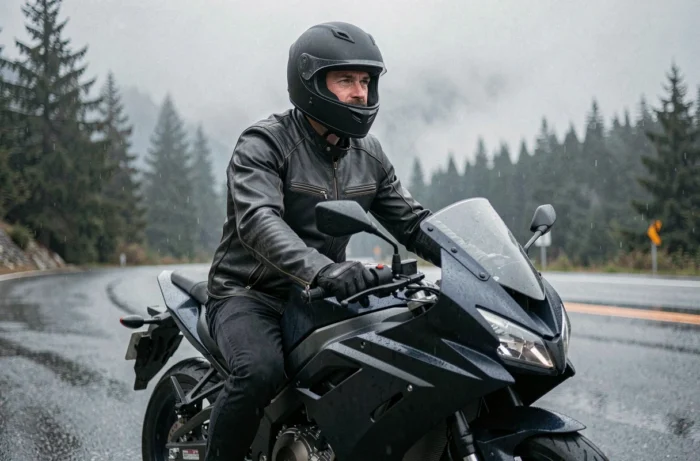
When you exit an underground parking lot on a freshly purchased motorcycle, the first constraint is neither pleasure nor speed, but compliance. In 2026, the motorcycle world is structured around new regulatory obligations, a market that evolves differently depending on engine sizes, and equipment choices that directly impact safety. Understanding these realities before twisting the throttle is what separates an informed rider from an exposed one.
Motorcycle Technical Inspection 2026: Key Deadlines Not to Miss
Since the gradual implementation of technical inspections for motorized two-wheelers, 2026 marks a decisive step. The motorcycles and scooters concerned must undergo their first inspection no later than four months after the anniversary date of their first registration, with a deadline of December 31, 2026.
The inspection covers several points: braking, tires, lighting, emissions, and noise. This is not just a simple administrative formality. A braking defect detected during the inspection leads to a mandatory re-inspection, and riding without a valid inspection exposes one to a fine.
For mopeds, the regulations have tightened further. Since March 1, 2026, the maximum speed of L1 category mopeds can be checked with a speedometer during the inspection. Unrestricted 50 cc models, which are very common in the second-hand market, are directly targeted. If considering the purchase of a second-hand moped, it’s better to check that the vehicle hasn’t been modified before finding oneself stuck at the inspection center.
To keep up with motorcycle regulatory news and compare models, one can read on Expert Auto Moto for regularly updated files detailing obligations by vehicle category.

Motorcycle Market in France: Which Engine Sizes Are Really Growing
The French market for motorized two-wheelers is growing in 2026, but the growth is very uneven across segments. Models under 125 cc and those between 250 and 499 cc are driving the market up, supported by urban demand and young A2 license holders.
Large displacements over 1,000 cc are declining. This is not a coincidence. The typical profile of a large touring bike buyer is aging, and ZFE constraints in metropolitan areas complicate the daily use of older machines without a favorable Crit’Air sticker.
Electric Gains Ground Despite the End of the Bonus
Electric two-wheelers are experiencing a significantly more favorable dynamic than the overall market. What makes this progression remarkable is that it occurs after the removal of the national ecological bonus applicable to electric two-wheelers, effective at the end of 2024.
Specifically, urban electric scooters attract users with their reduced operating costs and free access to ZFEs. Feedback on this point varies depending on the models and actual range in winter conditions, but the underlying trend remains clear. For commuting in urban areas, electric options are becoming credible without subsidies.
Motorcycle Gear: What Changes the Game in Case of a Fall
One can spend hours choosing a motorcycle model and completely neglect the gear. On the ground, the opposite matters. An ECE 22.06 certified helmet remains the non-negotiable minimum, but it’s below the helmet that choices become crucial.
- A jacket with CE level 2 certified back, elbow, and shoulder protections absorbs significantly more energy than level 1 gear during an impact.
- EN 13594 certified gloves are mandatory, but not all are equal: prioritize those with knuckle protection and reinforcements on the palm.
- High boots protect the ankle, the most exposed area during a low-speed fall in the city.
- A motorcycle airbag (vest or integrated into the jacket) drastically reduces the severity of chest injuries, and several models now operate without a subscription.
A complete set of gear often costs as much as several months of insurance, but it pays off from the first slide on wet gravel. Buying a budget helmet to invest more in the aesthetics of the motorcycle remains a common mistake among beginners.
Choosing a Second-Hand Motorcycle: Pitfalls to Check
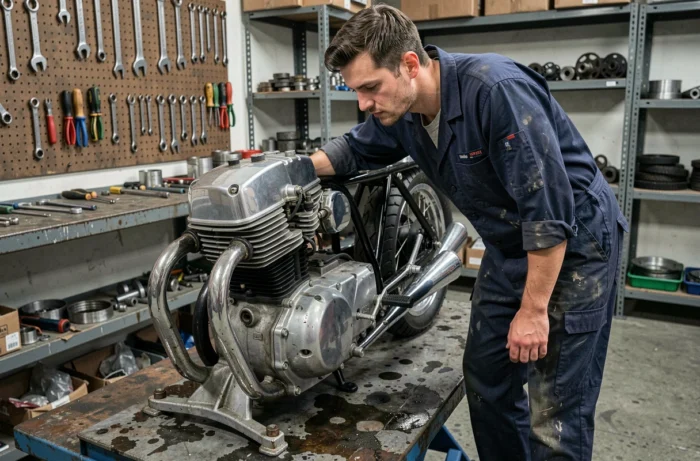
The second-hand market represents the majority of motorcycle transactions in France. With the arrival of technical inspections, the game changes. A valid technical inspection does not guarantee the absence of mechanical defects, it only certifies compliance on the points inspected at the time of the inspection.
Before signing, one should check several elements that the technical inspection may not cover in depth:
- The condition of the chain and transmission kit (sprockets, crown): a replacement represents a significant cost if not anticipated.
- The play in the steering bearings, detectable by lifting the front of the motorcycle and turning the handlebars by hand.
- Concealed crash marks: new handlebar ends on a five-year-old motorcycle, scratched engine casing on the right side, mirror replaced on only one side.
A seller who refuses a road test often cites insurance. Sometimes this is legitimate, sometimes it’s an excuse. In any case, demanding to start the engine cold before the visit allows for detecting distribution noises or a difficult start that the seller might have concealed by warming up the machine.
The Maintenance Logbook, the Best Indicator of Reliability
A maintenance logbook kept by a professional, with dated invoices, is worth more than a low mileage displayed on the odometer. Motorcycles with tampered odometers are not rare in the second-hand market, and the technical inspection does not verify the consistency of the mileage.
The motorcycle world in 2026 boils down to a simple reality: riding informed costs less than riding blindly. Between the technical inspection, a market that redistributes the cards among engine sizes, and the rise of electric, every purchasing or equipment decision deserves to be made with up-to-date data rather than habits inherited from ten years ago.


