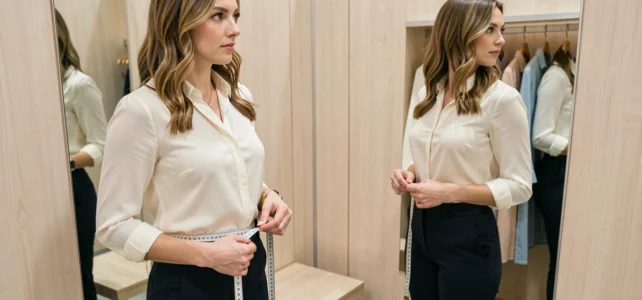
At H&M, the size displayed on the label does not reflect the same reality depending on whether you are buying a flowy top, skinny jeans, or a fitted bodysuit. The brand’s official guide advises comparing your measurements (bust, waist, hips) to the chart provided on each product page, rather than relying on the size worn at another store. We recommend going further by adapting the measurement method to the type of item targeted.
Size inconsistencies between categories at H&M women’s
The main point of friction reported by shoppers does not concern whether H&M sizes small or large uniformly. It concerns the size gap from one category of clothing to another. A size 38 in an oversized blouse and a size 38 in a ribbed bodysuit do not fit the same areas of the body, and the basic pattern differs.
On a loose top or boyfriend shirt, the determining measurement is the bust circumference. The cut allows for generous ease at the bust and waist, which masks a possible gap of one or two centimeters at the hips. Taking your usual size works most of the time.
On H&M jeans, the situation changes. Feedback on forums shows that stretch materials distort the perception of size. A jean with a high proportion of elastane may feel tight when trying it on, but then relaxes after a few hours of wear. We observe that models in rigid denim, on the other hand, maintain their original sizing. The practical rule: for stretch jeans, do not size up just because the fabric feels “tight” when putting them on.
To consult a H&M women’s size guide that details these discrepancies by category, cross-referencing with your own measurements remains the most reliable method.

Measurements by garment: bust, waist, or hips depending on the piece
A single measuring tape is not enough if you always measure the same reference point, regardless of the item. The priority measurement varies according to the garment’s construction.
Tops, shirts, and structured jackets
The dominant measurement is the bust circumference taken under the armpits, at the fullest point of the bust. For a fitted jacket, add the thickness of the fabric as a constraint: if your measurements fall between two sizes, take the larger size to maintain ease at the shoulders.
Pants, jeans, and skirts
Here, the hip circumference takes precedence, measured at the widest point of the hips. The waist circumference comes in as a secondary criterion. H&M high-waisted pants require that both measurements are compatible with the same size in the chart. When this is not the case, prioritize the larger measurement and adjust at the waistband if necessary.
Fitted dresses and bodysuits
These pieces simultaneously engage the bust, waist, and hips. This is the category where perception gaps are most frequent. User feedback on forums indicates that H&M bodysuits generate the most frustration, as the inseam imposes a torso length that does not appear in the standard size chart. If you have a long torso, size up on bodysuits, even if your measurements match the chart.
Materials and finishes: what the size chart does not say
The H&M size chart displays identical centimeter-size correspondences regardless of the material. In practice, a size 40 in fluid viscose and a size 40 in rigid cotton poplin do not fall the same way.
- Woven materials without elastane (poplin, linen, raw denim) adhere to the sizing in the chart. Rely on the indicated measurements without adjustment.
- Ribbed knits and stretch jersey hug the body and can give a feeling of tightness when trying on. A stretch jersey relaxes by about half a size after a few wears.
- Light synthetic materials (recycled polyester, technical satin) glide over the body and add an impression of volume. On these fabrics, do not size down reflexively, especially for flowy pants.
Checking the composition on the product page before ordering avoids most unpleasant surprises. The proportion of elastane, even if low, alters the garment’s behavior when worn.
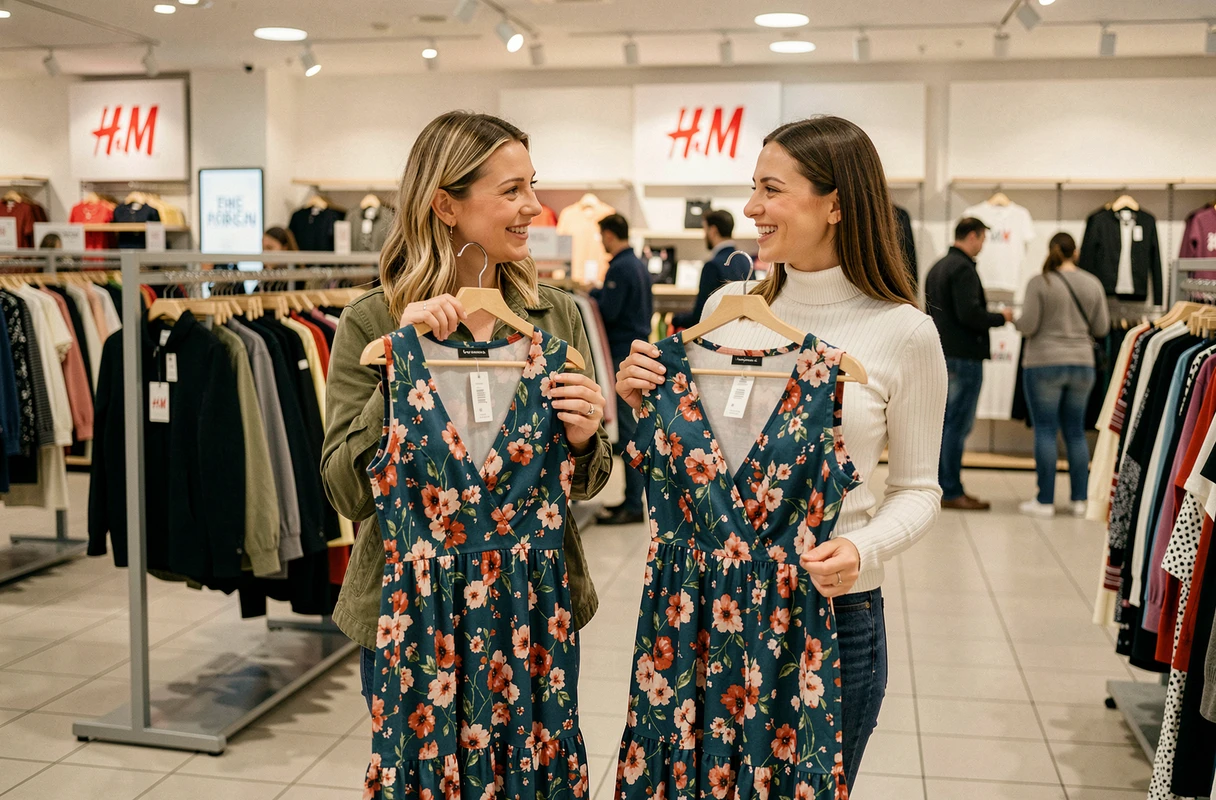
Reliable measurement technique for online ordering
The official H&M method relies on three measurement points. We recommend adding two additional checks for online purchases, where trying on is not possible.
- Bust circumference: horizontal measuring tape, at the fullest point of the bust, without compressing. Keep a finger slipped under the tape to ensure minimal ease.
- Waist circumference: at the natural dip, between the lower ribs and the navel. Do not suck in your stomach; the measurement should reflect your resting shape.
- Hip circumference: at the widest point of the hips, measuring tape strictly horizontal. Stand in profile in front of a mirror to check the horizontal alignment.
- Inseam length (for jeans and pants): from the inseam to the ankle, standing barefoot. This measurement is missing from most online guides, but it determines how the pants fall.
- Torso length (for bodysuits and jumpsuits): from the shoulder, at the highest point of the neck, to the inseam. A difference of a few centimeters can turn a comfortable bodysuit into a piece that pulls at the shoulders.
Take your measurements in thin underwear, standing, arms at your sides. Note them in the Notes app on your phone: you will have them handy for each order without having to pull out the measuring tape again.
The most useful reflex remains to compare your measurements to the chart on each product page rather than memorizing “I wear a size 38 at H&M.” The brand adjusts its patterns according to collections, and the same size number can cover slightly different measurement ranges from one season to the next.
Ordering two close sizes and returning the one that does not fit remains the safest strategy for fitted pieces. Check the return conditions at the time of purchase.