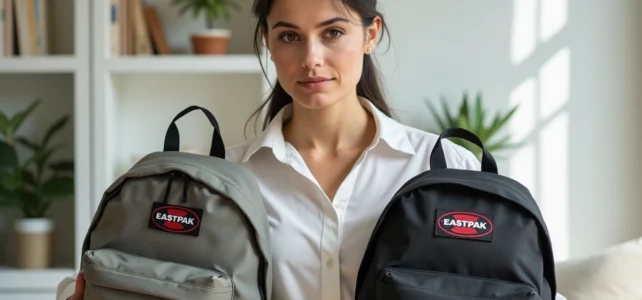
An authentic Eastpak bag is distinguished from a counterfeit by a set of precise physical markers: fabric quality, zipper type, label typography, and seam finishing. The difficulty lies in the fact that recent copies are increasingly replicating the overall appearance, making superficial examination insufficient.
Eastpak Authentication by Multi-Point Method
Most guides limit themselves to two or three checks (logo, seams, zipper). This approach allows well-made counterfeits to slip through. A multi-point authentication combines at least five cross-checked criteria to ensure a reliable diagnosis.
Specifically, the bag should be examined with a magnifying glass, a lamp, and high-definition photos of the official model displayed on a screen. Direct visual comparison, point by point, remains the most accessible technique for a non-specialist buyer.
The criteria detailed in a guide like that of the Stylissima site to recognize an Eastpak bag help structure this verification without missing any steps.
YKK Zippers and Hardware: The Most Reliable Test
Eastpak bags use YKK brand zippers. This detail is the most discriminating checkpoint because it is difficult and costly for a counterfeiter to reproduce.
Identifying the YKK Marking
On an authentic bag, the YKK logo is engraved or molded on the zipper slider. The engraving is clear, consistent, and slightly raised. On a copy, the marking is often absent, blurry, or replaced by generic initials.
The slider itself glides smoothly and silently. A zipper that catches, squeaks, or has a slider with metal burrs indicates low-quality hardware, incompatible with Eastpak production.
Weight and Feel of the Metal
The hardware of a genuine bag has a noticeable weight. A slider that is too light, seeming hollow, or a pull tab ring made of chrome-plated plastic rather than metal indicates a counterfeit. Weigh the zipper between two fingers: authentic metal has a solid density, not a plastic feel.
Eastpak Interior Label: Typography and Information to Verify
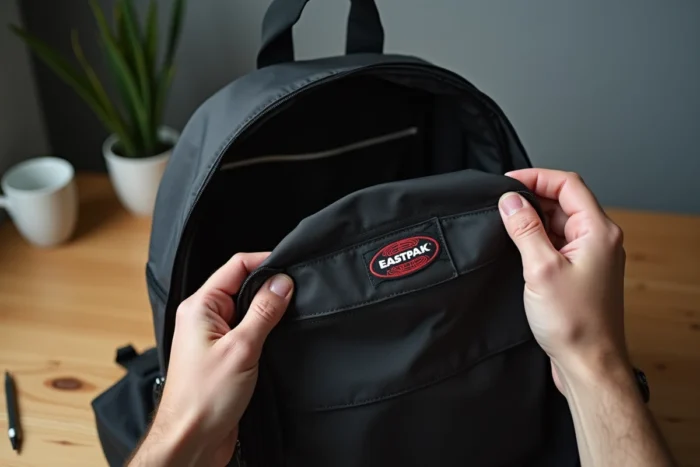
The interior label contains several usable clues. On an original bag, it includes the Eastpak logo, model name, country of manufacture, and a product code. The typography is clean, the characters are aligned, and the ink does not smudge.
- The logo embroidered or printed on the label must exactly reproduce the official font, without variation in thickness or color compared to visuals from the Eastpak site.
- The manufacturing information (fabric composition, country of origin) must be consistent with the purchased model. A vague label, lacking precise mention, is suspicious.
- The product code, when present, can be cross-referenced with the references available on the official site or authorized retailers.
On counterfeits, the label often has spelling mistakes, approximate alignment, or visibly inferior print quality. A blurry or poorly cut label is enough to rule out authenticity.
Fabric, Seams, and Exterior Logo: The Details that Differentiate
Cordura or Polyester Fabric of Eastpak
Eastpak bags are made from dense polyester, often Cordura type on high-end models. The fabric has a tight texture, slightly rough to the touch, with notable abrasion resistance. A counterfeit generally uses a finer, smoother polyester that wrinkles easily.
The tactile test is simple: pinch the fabric between your thumb and index finger. An authentic fabric resists deformation and returns to its shape. Fabric that is too soft or too shiny should raise a red flag.
Seams and Finishing
On an Eastpak bag, the seams are regular, with no loose threads, and with a consistent spacing between stitches. Reinforcements at stress points (straps, bottom of the bag, handle) feature double stitching.
Counterfeits frequently exhibit loose threads, irregular seams, or skipped stitches. Turn the bag inside out and examine the interior: the internal finishing of an original is as clean as the exterior.
The Embroidered Exterior Logo
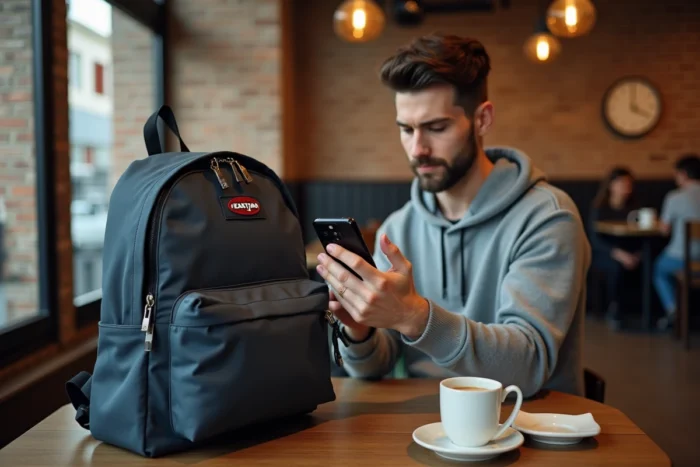
The Eastpak logo on the front pocket is embroidered with a uniform thread density. The letters are well spaced, without blurring. On a copy, the embroidery is often flat, with overlapping threads or irregular spacing between characters.
Fraudulent Sites and Rock-Bottom Prices: Warning Signals Before Purchase
Eastpak counterfeits are increasingly circulating through websites that mimic the graphic charter of official stores. The URL resembles that of the brand, the visuals are copied from the catalog, and only a careful examination of the legal mentions, physical address, or return conditions reveals the deception.
- Check that the site offers secure payment and displays a verifiable physical address.
- A price significantly lower than the usual rate for a given model is an almost systematic warning signal for branded bags.
- Massive promotions only relayed on social media, without a link to an authorized retailer, are a recurring pattern of counterfeit sellers.
Buying from an official retailer or physical store remains the safest method to avoid any unpleasant surprises. If in doubt about a bag already purchased, cross-check at least four of the criteria described above before concluding. A single suspicious point is not always sufficient, but three combined anomalies generally leave little room for doubt.