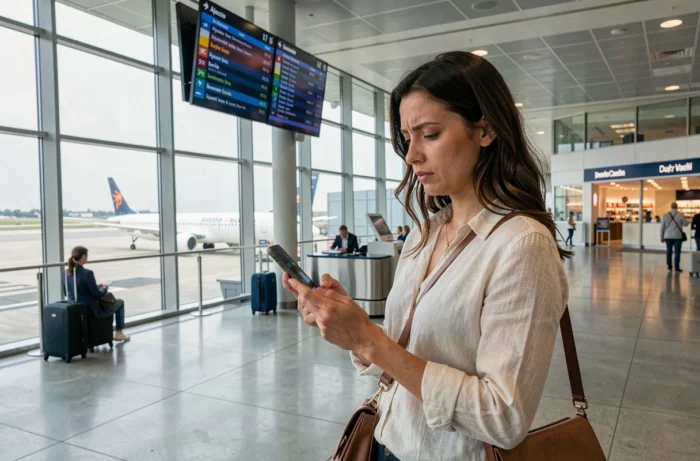
The price of a ticket to Ajaccio, Bastia, or Figari is not just a matter of classic supply and demand. The very structure of the Corsican air market produces high prices, and the levers to contain them require a nuanced understanding of the mechanisms at play.
Public service obligation and price locking of Corsican routes
The air links between the mainland and Corsica are governed by public service obligations (PSO). This framework, stemming from European law, imposes frequency, capacity, and continuity constraints on the companies operating these routes. In return, they receive financial compensation paid by the Corsican community.
The problem lies in the collateral effect of PSOs on competition. Once a company is designated for a route under obligation, other operators are no longer allowed to offer their own fares. This results in a nearly closed market on the main routes (Paris-Ajaccio, Paris-Bastia, Marseille-Ajaccio, etc.), where Air Corsica and Air France operate without direct competitive pressure.
When booking a direct flight to Corsica from the major Paris airports, the fare reflects this lack of competition much more than a real cost of fuel or rotation. Low-cost airlines only operate on secondary or seasonal routes, which are insufficient to structurally drive prices down.
Real cost of the Corsican flight: the plane ticket is only half the problem

We observe that the debate focuses on the displayed ticket price, while the real additional cost of an air stay in Corsica largely comes from an overlooked item: car rental upon arrival. Recent comparisons between plane and ferry for a family show that the ferry is almost always cheaper, not because of the gross difference in transport, but because the ferry traveler brings their own vehicle.
On the island, the rental vehicle fleet remains limited and demand explodes in high season. Rental rates can double or even triple between June and August. This hidden cost transforms an already high plane ticket into a total budget significantly higher than that of a maritime crossing.
Before comparing prices on a comparator like Kayak, we recommend systematically adding the cost of car rental to the flight fare. It is this addition that makes the destination so expensive by plane, not the ticket alone.
End-of-summer price window: the underutilized slot for flights to Corsica
Most travelers book between mid-June and mid-August, a period when airlines have no reason to lower their prices. The end of August and September represent a time when prices drop significantly. The airport in Ajaccio then sees a slowdown in traffic, and airlines struggle more to fill their planes on leisure direct routes.
This phenomenon has intensified in recent years. The Corsican tourist season slightly shortens at the end of summer, creating price opportunities that booking tools do not spontaneously highlight. Specifically, a flight from Strasbourg to Bastia or Nantes to Ajaccio at the end of August can cost significantly less than the same journey three weeks earlier.
Subsidized seasonal routes outside the high season
The Corsican community has implemented an unprecedented system in Europe: the financing of air routes outside the tourist season. Air Corsica and Volotea operate subsidized links, particularly from Bordeaux, Nantes, and Strasbourg, aiming to transport around 250,000 tourists per year on these routes. The cost to the community amounts to about 2.5 million euros per year.
These routes offer more accessible rates than the classic high-season links. They represent a concrete lever for travelers flexible with their dates.
Concrete strategies to reduce the price of a plane ticket to Corsica
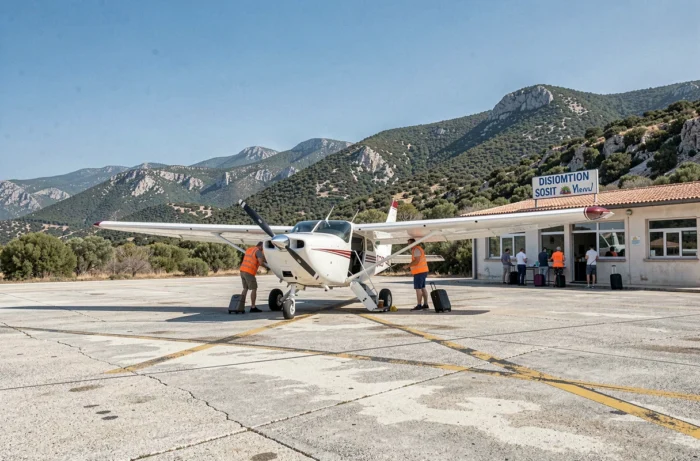
Generic advice (book early, be flexible) applies everywhere. In the Corsican market, some specific tactics make a real difference:
- Favor provincial airports for departure. Seasonal routes from Strasbourg, Nantes, or Bordeaux to Corsica benefit from subsidies that lower prices, unlike the Paris-Ajaccio or Paris-Bastia routes locked by PSOs.
- Systematically compare the budget for flight + car rental with a ferry trip bringing the vehicle. For a family, the ferry is often the most economical choice, especially in July-August.
- Target the end-of-August – September window, when pressure on air capacity decreases and airlines adjust their prices downward to maintain their load factor.
- Monitor new routes opened by companies like Aeroitalia, which operates new routes to Sardinia and could eventually expand its Corsican network, adding welcome competition on currently locked routes.
Comparators and price alerts: what they don’t capture
Flight comparators (Kayak, Google Flights, Skyscanner) aggregate published rates, but they do not reflect offers related to subsidized routes outside the season, often distributed only on the companies’ websites. Checking directly on Air Corsica and Volotea remains the reflex to adopt for these slots.
Automatic price alerts work well in competitive markets with many operators. On Corsican routes under PSO, price variations are more rigid and decreases are less frequent. The alert therefore has less predictive value than on a Paris-Barcelona route.
The price of a direct flight to Corsica will remain structurally high as long as the market operates with so little competition on the main routes. Off-season subsidies and shifting a few weeks on the calendar remain, for now, the two most effective levers to contain the bill.


