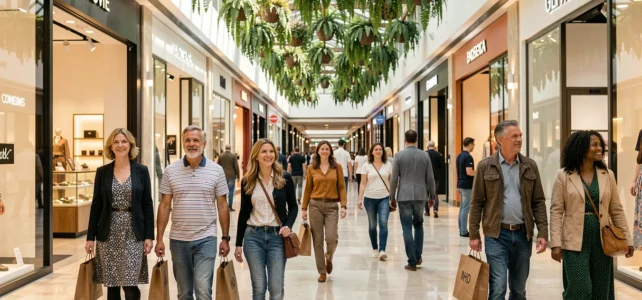
Côté Seine, in Argenteuil, has been welcoming its visitors for over twenty years. This shopping center in Val-d’Oise does not have the size of the major regional destinations in Île-de-France, and it does not seek to compete with them. Its attractiveness relies on a different positioning, rooted in the daily life of a dense population basin, just a few kilometers north of Paris. Understanding what drives residents and visitors to return requires looking beyond the simple list of shops.
Change of food brand at Côté Seine: a turning point for attendance
The hypermarket is the main driver of traffic in a local shopping center. At Côté Seine, this driver has experienced two shocks in a short time. The former Casino was taken over by Carrefour in 2024, before being sold to Intermarché at the request of the Competition Authority. The effective brand change dates back to spring 2026.
This double shift alters the assortment, pricing policy, and the image perceived by customers. A hypermarket that changes its name twice in two years could destabilize shopping habits. On the other hand, the arrival of Intermarché, a brand known for its competitive prices on fresh products, can renew the attractiveness of the food section and attract customers who had stopped coming.
Field feedback varies on this point: some locals regret the disappearance of Casino references, while others welcome a strengthened butcher section. For the Côté Seine shopping center in Argenteuil to maintain its momentum, the stabilization of this food brand will be crucial in the coming months.
Accessibility and urban development around the Argenteuil shopping center
A shopping center does not exist in a vacuum. The immediate environment influences the decision to visit, especially for a local site where the majority of visitors arrive on foot or by public transport.
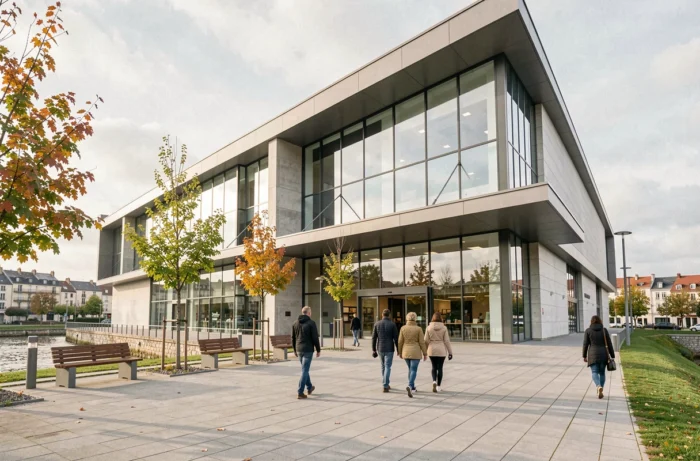
In 2026, Argenteuil is undertaking a second phase of redevelopment work on Avenue Gabriel-Péri, called the Canopée project. The goal is to transform this axis into a green promenade, with widened sidewalks and calmed traffic. Concretely, pedestrian access to the center from the train station and nearby residential areas becomes more pleasant.
This urban transformation is not insignificant. A secure and shaded pedestrian route increases the time that visitors are willing to spend on the journey. For a medium-sized center like Côté Seine, every minute gained in access comfort potentially translates into an additional visit during the week.
Argenteuil station and future underground parking
The work on Argenteuil station and the associated underground parking, launched in 2025, enhances the intermodality of the area. A user of the Transilien line J who gets off at Argenteuil can consider a detour to Côté Seine before heading home, without a significant diversion. This proximity between the station and the shopping center structures daily attendance much more than any promotional campaign.
Hours and format: why Côté Seine operates like a flow commerce
The large shopping malls in Île-de-France rely on events, concept stores, and food halls to justify a long trip. Côté Seine plays a different card: that of regular, almost routine visits.
The center’s operating hours, including on certain holidays, contribute to this logic. A center open when street shops are closed mechanically captures part of the demand. This is an advantage that visitors do not always articulate, but it weighs in their habits.
- A medium-sized format that allows shopping in under an hour, without the fatigue of a journey of several hundred linear meters
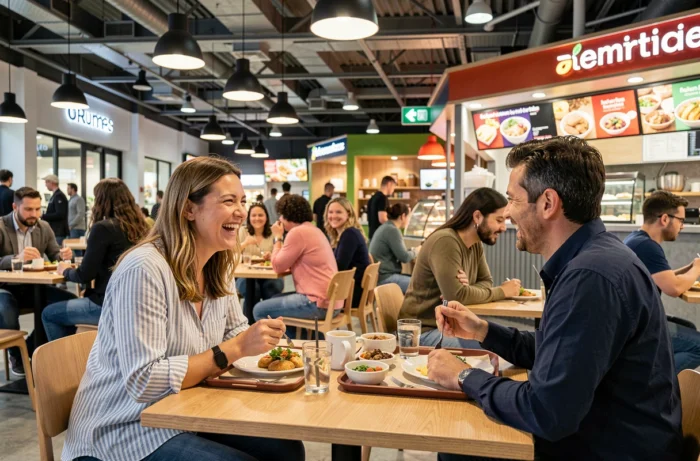
- A range combining food, fashion, banking services, and fast food, sufficient to cover most weekly needs
- A location in the city center, unlike peripheral commercial areas accessible only by car
Côté Seine operates as an urban flow commerce, not as a leisure destination. This distinction explains why its attendance remains stable even when more distant centers experience declines in weekday traffic.
Competition in the Paris suburbs: where Côté Seine stands against Val-d’Oise malls
Val-d’Oise and Yvelines have several large commercial hubs. The malls in Cergy-Pontoise, for instance, attract a regional clientele willing to travel several dozen kilometers. To the east, the centers in Sarcelles and Villiers-le-Bel position themselves in similar segments.
Côté Seine does not compete directly with these sites. Its catchment area is tighter, centered on Argenteuil and neighboring municipalities. This seemingly limiting market size is paradoxically an asset: customer loyalty is stronger here than in large malls where visitors come occasionally for a specific brand.
A complementary positioning to Galeries Lafayette and Paris shopping
Residents of Argenteuil who wish to access major brands or Galeries Lafayette Haussmann take the Transilien to Paris in less than half an hour. Côté Seine does not seek to replicate this offer. It covers daily and weekly shopping, leaving leisure shopping and premium brands to the Parisian galleries.
This complementarity is a factor of resilience. Suburban shopping centers that have tried to mimic the Parisian offer have often lost clarity. Côté Seine remains identifiable: it is the local center of a city with over one hundred thousand inhabitants, nothing more, nothing less.
Renewal of the commercial fabric: signals to watch for Côté Seine
The longevity of a shopping center depends on its ability to renew its brands without losing its identity. Côté Seine celebrated its twentieth anniversary in 2022. At this age, centers that do not invest in modernizing their common areas and renewing their offerings begin to decline.
- The arrival of new fashion or service brands since the post-Covid recovery reflects an active marketing dynamic
- The urban redevelopment around the center enhances its attractiveness without the manager having to bear the full cost of the transformation
- The transition to Intermarché renews the food anchor, with a potentially more aggressive pricing position
The available data does not allow for conclusions about the exact evolution of attendance over the past two years. However, the signals converge towards a repositioning rather than a decline. The combination of a new food brand, urban access works, and a stable population base constitutes a foundation that many comparable shopping centers in the Île-de-France region do not have.
Côté Seine does not attract with the spectacular. It attracts because it meets a concrete, regular need, rooted in the rhythm of life of a dense suburban city. As long as this need exists and the center adapts, attendance will follow.