
The word “leisure” refers to the time a person has outside of their professional and domestic obligations. This free time is not limited to the absence of activity: how it is spent directly influences mental recovery, social life, and physical health. Choosing a suitable relaxation activity requires considering three concrete parameters: the available budget, the space (indoor or outdoor), and the number of participants.
Leisure according to budget: price as the first filter for choice
Cost remains the main barrier to regularly engaging in an activity, whether it is sports or cultural. A study published in September 2026 confirms that the majority of French people consider sports expenses too high. This observation also applies to cultural outings and indoor activities.
Classifying leisure ideas by budget range helps avoid the frustration of an inaccessible list. Three levels naturally emerge.
- Minimal budget (free or almost free): walking, hiking, drawing, reading in the library, board games already owned. These activities require no subscription and can be done with family or alone.
- Moderate budget (a few dozen euros per month): group classes in associations, gardening in shared plots, creative cooking at home, padel during off-peak times. Padel, in particular, is experiencing rapid growth in the leisure market in France.
- Higher budget: escape games, pottery workshops, water sports, regular cultural outings (museums, shows). Booking through a mobile platform sometimes allows for comparing prices before going out.
Thinking by budget before considering the type of activity prevents skimming over dozens of ideas without a financial reference. This approach is often missing in most online leisure guides, which explore leisure on the episode of Épisode Série from a thematic angle without addressing the cost issue.
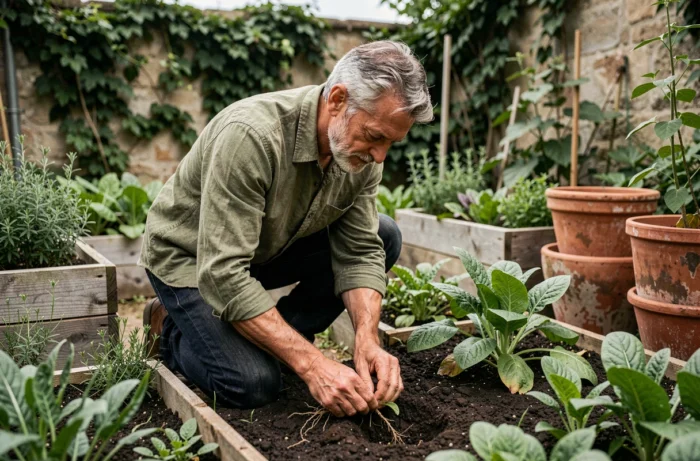
Outdoor activities and hiking: accessible relaxation leisure everywhere
Walking and hiking remain mass leisure activities in France, with a recent favorable dynamic. Their appeal lies in three characteristics: low cost, outdoor setting, and territorial accessibility. Unlike a gym subscription, a good pair of shoes is enough to get started.
The outdoors is not limited to hiking. Fishing, leisurely cycling, and geocaching (geolocated treasure hunting on smartphones) share the same advantage: they combine physical movement and exploration of the territory without requiring heavy infrastructure.
Hybrid leisure between digital and outdoor
Hybrid formats are on the rise: geolocated treasure hunts, augmented visits, outdoor escape games with augmented reality. These activities combine screens, movement, and real interaction, distinguishing them from purely digital or purely physical leisure.
For families with children, these formats have a practical advantage. The screen, often seen as an obstacle to relaxation, becomes a medium for collective outdoor play. Outings become more appealing for younger ones without shifting entirely to digital.
Indoor leisure ideas for rainy days
Rainy days or winter evenings pose a space constraint. The inside of the house then becomes the playground, and activities must adapt to a living room corner or a kitchen table.
Creative manual hobbies offer a measurable anti-stress effect. Drawing, watercolor painting, knitting, or wooden modeling require sustained concentration on a repetitive gesture. This focus on the present moment acts as a form of active meditation, without mystical vocabulary.
Creative cooking also falls into this category. Trying out an unknown recipe engages the senses (touch, smell, taste) and produces a concrete result. For children, baking remains a playful activity that combines learning and immediate pleasure.
Board games and play areas at home
Modern board games have evolved significantly. Publishers offer short formats (less than thirty minutes), cooperative games, suitable for groups of two to six players. A dedicated corner in the living room, even modest, is enough to create a regular family relaxation space.
Some criteria for choosing a suitable game for relaxation:
- Short game duration, to avoid cognitive fatigue after a busy day
- Cooperative mechanics rather than competitive, which reduces tension among players
- Rules explainable in less than five minutes, to include children or occasional players
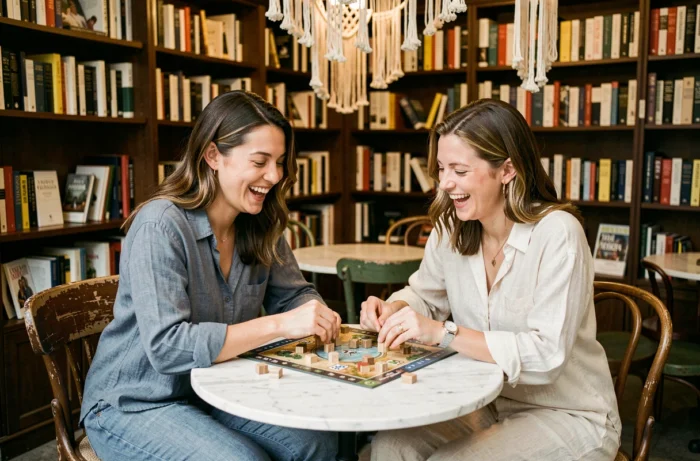
The collective dimension of leisure: why relationships matter as much as the activity
The collective dimension is gaining importance in the choice of leisure activities. The social bond created by a shared activity contributes as much to relaxation as the activity itself. A group cooking class, a game of padel with friends, or a hiking trip with several people generate interactions that are often lacking in professional daily life.
This relational dimension explains the success of cultural and sports third places. Versatile spaces host workshops, classes, and meetings in a less formal setting than a traditional association. The National Barometer of Sports Practices 2025 shows a progression in regular practice, partly driven by these new collective formats.
Conversely, solitary leisure activities (reading, drawing, gardening alone) meet a different need: recovery through silence and absence of social solicitation. The two types of activities do not oppose each other. Alternating between collective moments and solitary moments during the week creates a balance that neither can provide alone.
The choice of a relaxation hobby relies less on the nature of the activity than on its suitability with the budget, available space, and social need of the moment. A free walk in the forest and an augmented reality escape game serve the same purpose through very different paths. The only criterion that does not vary: the regularity of practice matters more than its sophistication.


