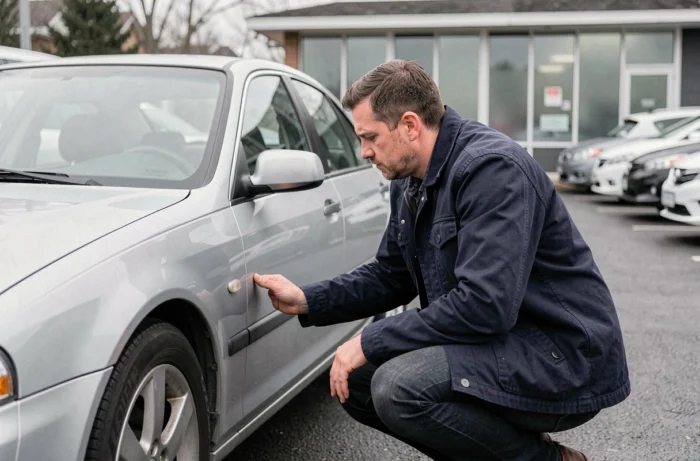
Buying a used car means balancing a limited budget with a variable level of risk depending on the sales channel, the mechanical condition of the vehicle, and the reliability of the documents provided. The used car market represents a transaction volume significantly higher than that of new cars, but each transaction exposes the buyer to hidden defects, incomplete histories, or artificially inflated prices.
Batteries and Depreciation: The Special Case of Used Electric Cars
The used electric car segment is experiencing marked acceleration. According to Auto Plus, sales of used electric vehicles surged by 52% in France in 2026. This increase is explained by a stronger depreciation compared to comparable thermal models, making some vehicles accessible to modest budgets.
Buying a used electric vehicle requires specific verification. Since September 4, 2026, displaying the SOH (State of Health) is mandatory for used electric cars, according to Économie Matin. This SOH measures the remaining capacity of the battery compared to its initial capacity. A vehicle priced well but whose battery retains only a fraction of its original range represents a poor investment.
To navigate this segment, one must require the battery diagnostic report, check the measurement method used, and compare the result with the remaining manufacturer warranty. Assistance from the decree of August 10, 2026, can also reduce the purchase cost under certain conditions, according to Journal du Geek.
On automotive classifieds platforms, it is possible to quickly compare prices and features of many models, such as on https://www.24auto24.com/, which aggregates offers for used vehicles.
Technical Inspection and Vehicle History: The Two Non-Negotiable Filters

The technical inspection remains the reference document to objectively assess a vehicle’s condition. It must be less than six months old at the time of sale between private parties. However, a valid technical inspection does not guarantee the absence of mechanical defects. It covers a defined scope of inspection points, without disassembly or extended testing.
The vehicle history complements this assessment. The administrative situation certificate, available for free on the ANTS website, allows verification that the vehicle is neither encumbered, stolen, nor subject to opposition. Beyond this document, a maintenance log stamped by a professional and intervention invoices provide tangible proof of upkeep.
- The administrative situation certificate confirms the absence of encumbrance, declared theft, or opposition to the transfer of the registration certificate.
- The stamped maintenance log attests to compliance with the manufacturer’s recommended service intervals.
- The intervention invoices detail the replaced parts and help identify major repairs (clutch, timing belt, injectors).
A seller who refuses to provide these elements sends a clear warning signal. It is better to move on to another listing than to negotiate in uncertainty.
Negotiating the Used Price: What Really Lowers the Bill
The value of a used vehicle depends on the model, mileage, year of first registration, and trim level. Valuation sites offer a comparison base, but the actual price is negotiated based on identified defects, not on a general impression.
A worn tire, a chipped windshield, overdue maintenance, or a set of brake pads needing replacement represent concrete costs. Quantifying these items before the discussion allows for a reasoned offer. Conversely, negotiating “by feel” without precise notes rarely leads to a significant reduction.
The test drive plays a direct role in this stage. Driving for at least twenty minutes, varying speeds (city, highway, hard acceleration), reveals rolling noises, gearbox jolts, or abnormal behavior during braking that simple visual inspection does not detect. A rushed test drive costs more than an extended one.
Warranty and Recourse After Purchasing a Used Vehicle
Buying from a professional offers a more protective legal framework than a sale between private parties. The legal warranty of conformity applies for two years when purchasing from a professional. It covers defects existing at the time of delivery, even if not apparent.
Between private parties, the main recourse relies on the warranty against hidden defects. The defect must be prior to the sale, serious enough to render the vehicle unfit for use, and not visible at the time of purchase. The burden of proof lies with the buyer, which often requires independent expertise.
- From a professional: two-year legal warranty of conformity, without needing to prove the defect’s prior existence during the first months.
- Between private parties: warranty against hidden defects, with the buyer required to demonstrate that the defect existed before the sale.
- In both cases: the “sold as is” clause does not eliminate the warranty against hidden defects if the seller was aware of the defect.

The choice of purchase channel thus determines the level of post-transaction protection. A lower price between private parties comes with a risk of more complex recourse. The real cost of a vehicle includes legal risk, not just the displayed price.
The massive influx of electric vehicles into the used market is changing the usual evaluation criteria. The battery replaces the thermal engine as the main risk factor, and diagnostic tools are evolving accordingly. Regardless of the type of engine, the method remains the same: document, verify, quantify, then decide.


