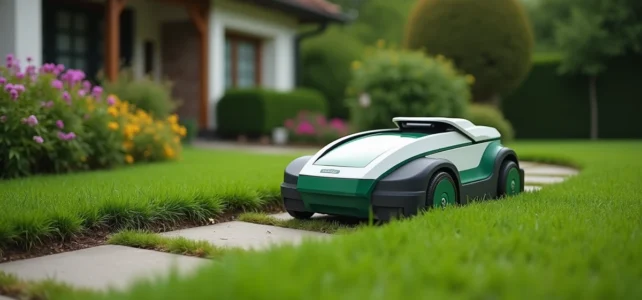
The Gardena Sileno is a perimeter wire robotic mower designed to automate lawn maintenance on small to medium-sized areas. A subsidiary of the Swedish group Husqvarna, Gardena leverages the expertise of its parent company in robotic mowing, placing the Sileno in a proven technical lineage.
Gardena Sileno’s Perimeter Wire: Is This Technology Still Relevant?
The Sileno operates based on a buried or ground-fixed perimeter wire that defines the mowing area. The robot detects this electromagnetic signal to know where to go and where to stop. This system requires a physical installation phase that many users describe as tedious, especially on terrains with flower beds, trees, or irregular borders.
The wire must be laid a few centimeters from the edge of the lawn, secured with stakes, and then gradually covered by the regrowth of the grass. Any subsequent modifications to the garden (new tree, patio extension) necessitate repositioning part of the wire.
In light of this constraint, the question arises: do wireless models that use satellite navigation and sensors render this system obsolete? Recent comparisons place robots like the Segway Navimow H210E, equipped with a so-called “triple fusion” navigation, ahead of wired models for new buyers.
The Sileno remains a reliable solution for those who have already installed their wire, but it is no longer the obvious choice for a first purchase. Several detailed reviews confirm this analysis, and consulting a review of the Gardena robotic mower allows for a concrete understanding of the wire’s limitations in daily use.
Gardena Smart System App: Control and Software Limitations
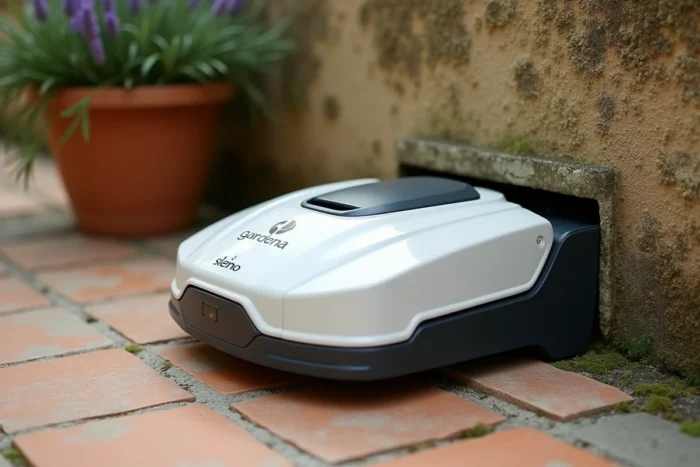
The Smart version of the Sileno connects to the Gardena Smart System app, which allows users to schedule mowing times, adjust cutting height, and monitor the robot’s status remotely. Integration with other Gardena devices (irrigation, soil sensors) is an asset for gardens already equipped within this ecosystem.
Programming via the app remains functional for basic settings. Defining time slots, activating or pausing mowing from a phone works as expected.
However, user feedback indicates slow synchronization and an interface that lacks clarity for advanced settings. The review of the Sileno Free (wireless) version published by Galaxus explicitly mentions “software issues,” and these software weaknesses seem to be shared across several models in the range. The app could benefit from a redesign to compete with the more fluid interfaces offered by some competitors.
Mulching and Mowing Quality of the Sileno Robot
The Sileno operates exclusively in mulching: grass blades are cut into very fine fragments, which are then deposited back onto the lawn, where they decompose and nourish the soil. This process eliminates the chore of collection and reduces long-term fertilizer needs.
The quality of the cut directly depends on the frequency of mowing. The robot mows small amounts each cycle, producing a consistent result as long as it operates frequently enough. The three pivoting blades mounted on a rotating disc provide a clean cut as long as they remain sharp. Their replacement is simple and inexpensive.
- Adjustable cutting height over a fairly wide range, suitable for different types of grass
- Quiet operation allows for mowing in the evening without disturbing the neighbors
- Random passes prevent visible wheel tracks on the lawn
A point of caution: night mowing may pose problems in certain municipalities. Local regulations govern the use of motorized equipment, even silent ones, during specific hours. Checking municipal orders before scheduling nighttime sessions helps avoid unpleasant surprises.
Gardena Sileno Against Wireless Competition in 2025-2026
The market for robotic mowers has shifted towards models without perimeter wires. Satellite navigation systems (GNSS), sometimes combined with inertial sensors and artificial intelligence, allow these new robots to map the garden without any physical installation.
The Sileno remains relevant for gardens already equipped with a wire. Its mechanical reliability, inherited from the Husqvarna platform, and the simplicity of its maintenance make it a durable device. For an owner satisfied with their installation, switching to wireless is not a necessity.
For a first purchase, the situation changes. Wireless robots eliminate the installation constraint and manage terrain modifications better. The Segway Navimow i108E, for example, is presented in recent comparisons as a direct alternative to the Gardena Smart Sileno, with navigation deemed more innovative.
- The Sileno requires a perimeter wire and a guide wire, installed only once but difficult to modify
- Wireless robots map the terrain via satellite, making adjustments easier
- The Gardena Smart System ecosystem adds value if other Gardena devices are already in place
- The entry cost of the Sileno remains competitive compared to high-end wireless models
The Gardena Sileno delivers on its promises for mowing consistency and sound discretion. Its main drawback is now the perimeter wire, which has become a technical legacy in the face of wireless solutions dominating new launches. For a garden already wired, the Sileno continues to do the job without mechanical issues. For a blank slate, comparing with satellite navigation models before deciding remains the most sensible approach.