
Foldable smartphones, mixed reality headsets, and AI-powered assistants have shaped the tech news of 2024. Behind these high-profile launches, less visible changes are reshaping the digital landscape: a new European regulatory framework coming into effect, new requirements on device longevity, and reorganized cloud infrastructures. These high-tech trends deserve attention because they alter what you can buy, use, and demand.
European AI Act: the regulation that changes the rules of the game for artificial intelligence
Have you noticed that generative AI tools are multiplying in everyday applications? Instant translation, image generation, writing assistants: these services rely on increasingly powerful models. Their legal framework remained vague until recently.
The European regulation 2024/1689, dubbed the AI Act, came into effect on August 1, 2024. It classifies artificial intelligence systems according to various risk levels and imposes progressive obligations. The first prohibitions and the requirement for AI mastery have been in effect since February 2025. Rules targeting general-purpose AI models will follow from August 2025, and other transparency requirements will arrive starting August 2026.
In practical terms, a company deploying a chatbot or a CV sorting tool must now document how its system operates and assess its risks. Technologies deemed to present unacceptable risks (social scoring, mass biometric surveillance) are outright banned. This legal framework distinguishes Europe from other markets, and news published on Delta News net allows you to follow these regulatory developments over the months.
The AI Act requires companies to classify their AI tools by risk level. This constraint pushes solution providers to rethink the technical documentation of their products even before they hit the market.
Smartphone and tablet reparability: a mandatory criterion
Tech trend lists often talk about the latest gadgets, rarely about their lifespan. In 2024, the European Commission strengthened its requirements on the reparability of smartphones and tablets sold in the Union. The goal is to allow users to replace certain parts (battery, screen) themselves without always resorting to the manufacturer.
The gap between regulation and market reality remains significant, and this transition will take time before it becomes widespread.
For consumers, this means two things:
- Check the reparability index before buying a new phone or tablet, as this score reflects the availability of spare parts and ease of disassembly.
- Favor brands that publish repair manuals and guarantee access to parts for several years after the end of marketing.
- Compare the total cost of ownership (purchase price plus potential repairs) rather than just the price displayed in stores.
This trend towards long-lasting tech is gradually changing the criteria for choice. A repairable device is no longer just a marketing argument; it is a developing regulatory obligation.
Sovereign cloud and data management: what’s at stake in infrastructure
The cloud remains the technical foundation of most digital services, from photo storage to hosting professional applications. In 2024, the issue of data sovereignty has taken on a new significance in the purchasing decisions of businesses and administrations.
Storing sensitive data on servers located outside the European Union poses a concrete legal problem. The extraterritorial regulations of certain countries allow their authorities to access data hosted by their companies, even if the servers are located in Europe. Sovereign cloud solutions, operated by European players and exclusively subject to European law, are gaining ground.
This movement primarily concerns regulated sectors (healthcare, finance, public administrations), but it is gradually permeating the entire digital services market. Innovations in this area focus less on raw power and more on compliance, end-to-end encryption, and guaranteed data localization.
Robots, gadgets, and tech shows: beyond the spectacle
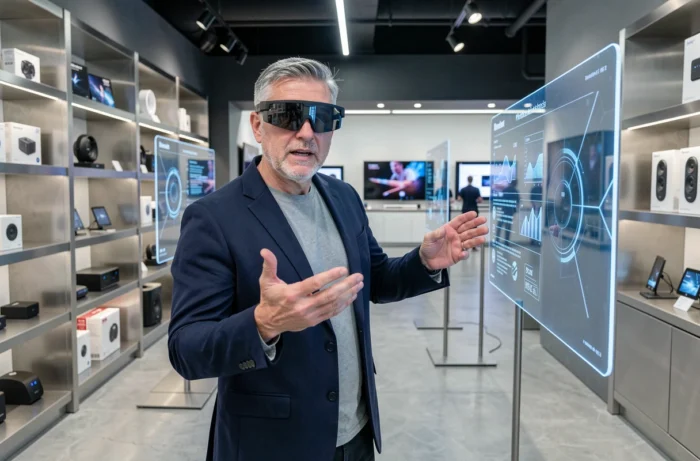
Tech shows like CES remain major showcases for consumer innovations. In 2024, home robots and connected gadgets took up considerable space. Autonomous vacuum cleaners capable of emptying their own bins, companion robots with voice recognition, smart glasses with integrated displays: the list of new products is long.
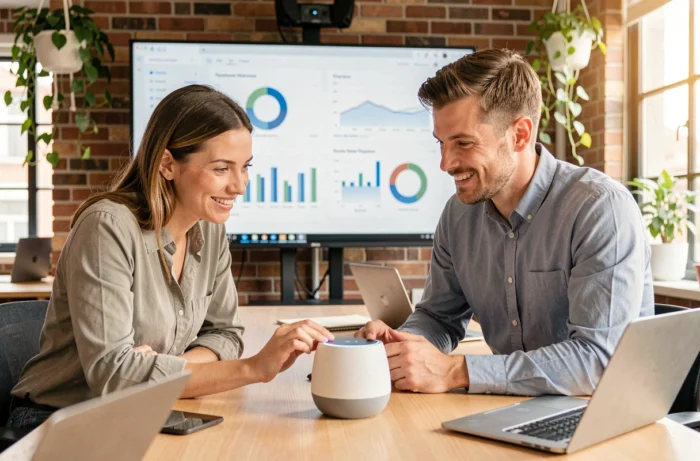
The question worth asking is: how many of these gadgets will still be in use in two years? Experience shows that products that integrate into an existing ecosystem survive better than isolated objects. A robot that works with voice assistants already installed in a home is more likely to be adopted than a device requiring an additional app and a dedicated account.
Three criteria to evaluate a tech gadget in 2024
- Compatibility with open standards (Matter, Thread) that allow interoperability between different brands.
- The manufacturer’s software update policy, as a connected object without updates becomes a security risk.
- The cost of consumables and accessories over time, often underestimated at the time of purchase.
Innovations showcased at trade shows are only valuable if they meet a real use case. A gadget without software updates becomes obsolete within a few months.
Artificial intelligence and video games: concrete uses in 2024
Artificial intelligence is not limited to chatbots. In the video game sector, it is transforming content creation and player experience. Non-player characters (NPCs) with real-time generated dialogues, AI image upscaling (DLSS from NVIDIA, FSR from AMD), and procedural level generation illustrate tangible applications.
These technologies allow smaller studios to produce more ambitious games without multiplying their workforce. For players, the gain is measured in graphical fluidity: AI upscaling offers performance close to native rendering with reduced GPU load.
The video game sector often serves as a laboratory for technologies that later migrate to other fields. Real-time physics simulation, tested in game engines, now feeds industrial design and architecture tools.
The year 2024 will thus be marked less by a flagship product than by a fundamental movement: technology is being regulated, repaired, and localized. The trends that will last are those that meet these three requirements simultaneously.


