Trees whose names start with K remain underrepresented in French-speaking nursery catalogs. This ranking compares ten species based on three selection criteria for a garden: hardiness, soil requirements, and mature size. The table below summarizes this data before the detailed analysis of each tree.
| Tree | Hardiness | Preferred Soil | Adult Height |
|---|---|---|---|
| Koelreuteria paniculata | Very good | Any type, even calcareous | Medium |
| Kaki (Diospyros kaki) | Good | Well-drained, rich | Medium |
| Kauri (Agathis australis) | Low (frost-free) | Deep, moist | Very tall |
| Kalopanax septemlobus | Good | Fresh, humus-rich | Tall |
| Cornus kousa | Very good | Acidic to neutral, fresh | Small to medium |
| Kumquat (Fortunella) | Medium (frost-free) | Well-drained, light | Small |
| Kalmia latifolia | Good | Acidic, fresh | Small (tree-like shrub) |
| Kigelia africana | Low (tropical) | Rich, well-drained | Tall |
| Kerria japonica | Very good | Ordinary | Small |
| Kolkwitzia amabilis | Very good | Any type | Small to medium |
Among the trees that start with k, some tolerate calcareous soil while others require an acidic pH. This single criterion eliminates or validates half of the list depending on your land.
1. Koelreuteria paniculata
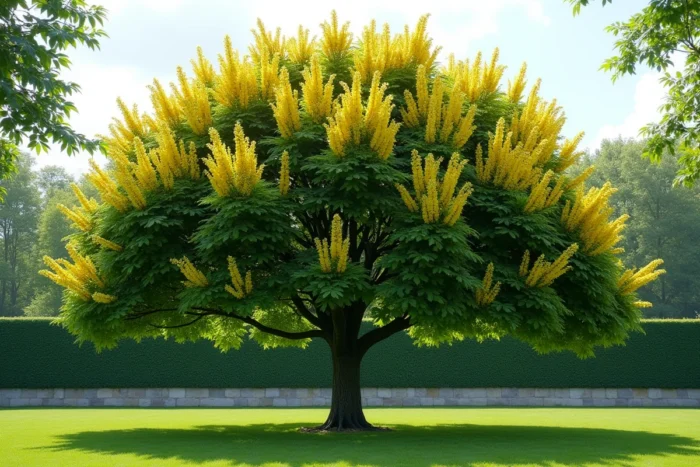
The soap tree, or Koelreuteria paniculata, stands out for its bright yellow summer blooms in large panicles. At a time when most ornamental trees have finished blooming, it takes over and attracts pollinators.
Its main asset for a garden: soil tolerance. Calcareous, clayey, poor, or dry, it adapts to almost everything. This plasticity makes it a strong candidate for urban gardens exposed to heat and disturbed soils.
On the other hand, its growth remains moderate. It takes several years to achieve a true crown volume. It is a choice of patience, not a quick screen tree.
2. Kaki (Diospyros kaki)
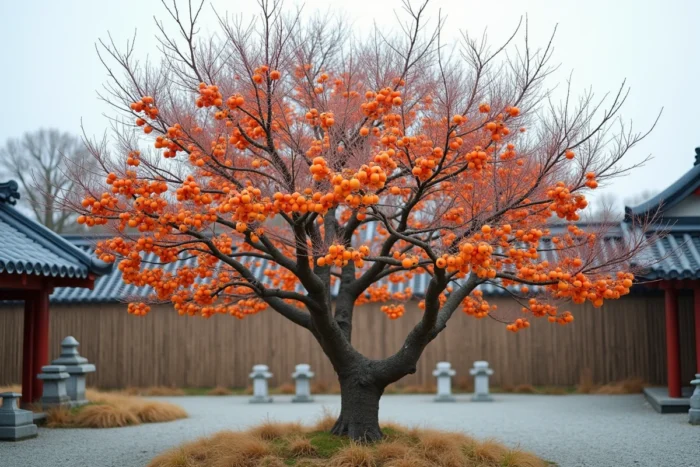
The kaki combines ornamental value and fruit production, which few K trees offer simultaneously. Its foliage turns reddish-orange in autumn, and the fruits persist on the bare branches, creating a striking visual effect in winter.
It requires well-drained, rich soil. In temperate climates, self-fertile varieties allow for harvesting without a pollinator, provided a sheltered location from cold winds is chosen. The kaki withstands moderate frosts, but young specimens remain vulnerable in the first years.
3. Cornus kousa
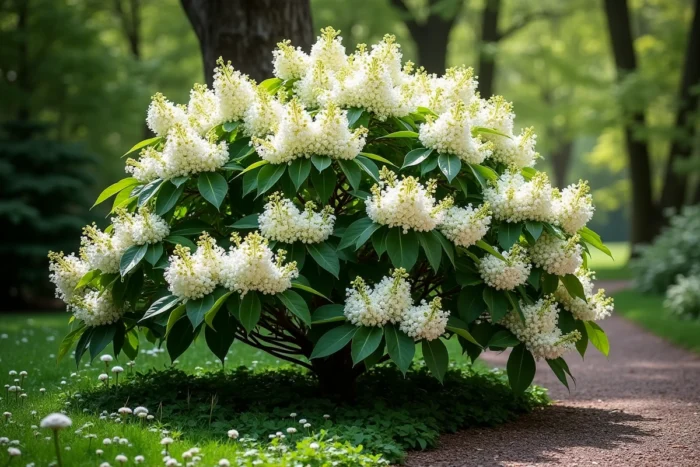
The Japanese dogwood is more robust than most so-called exotic decorative trees. Its flowering in white or pink bracts, spread over several weeks at the beginning of summer, makes it spectacular without requiring complex maintenance.
The main constraint is the soil: Cornus kousa refuses calcareous soil. It needs acidic to neutral, fresh, and well-drained ground. If your garden is on calcareous subsoil, move on or plan for a significant heather soil pit.
Its slow growth makes it suitable for medium-sized gardens where a structuring tree is sought that won’t invade the space in just a few seasons.
4. Kalopanax septemlobus
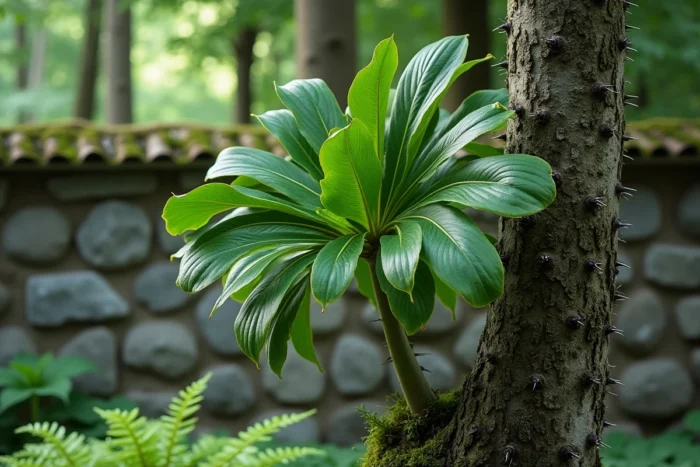
The Kalopanax, sometimes called the spiny tree, attracts attention with its trunk covered in spines and its large palmate leaves. It is a collector’s tree, rarely offered in garden centers.
It prefers fresh, humus-rich soils, in partial shade or full sun. Its spreading habit requires space. It is more suitable for large gardens or parks than for housing plots.
5. Kumquat (Fortunella margarita)
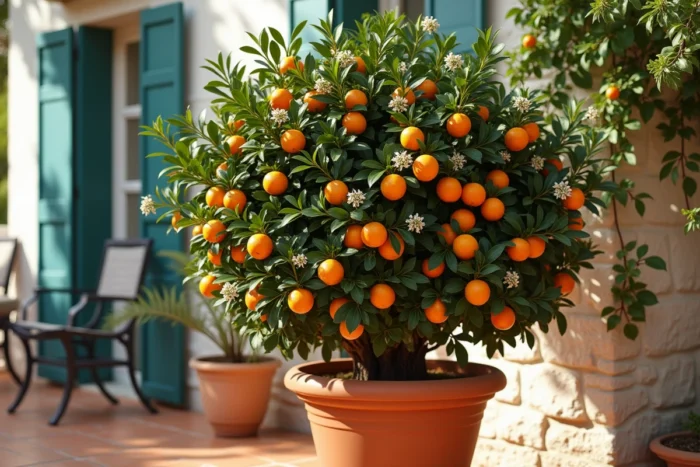
The kumquat is one of the few citrus fruits suitable for pot cultivation in regions where frost is common. Its small fruits are eaten whole, skin included, and its evergreen foliage remains decorative year-round.
In the ground, it only survives in mild coastal zones. Elsewhere, pot cultivation with wintering away from frost (veranda, bright garage) remains the norm. Good drainage of the substrate is essential for its survival in a pot.
6. Kauri (Agathis australis)

The Kauri is a conifer native to New Zealand, capable of reaching considerable dimensions in its natural habitat. In Europe, its cultivation is limited to areas without prolonged frost, such as certain pockets of the Atlantic or Mediterranean coast.
Its interest is primarily botanical and landscape-related in the very long term. A Kauri in a European garden remains a gamble, reserved for enthusiasts willing to protect the tree every winter during its first years.
7. Kalmia latifolia
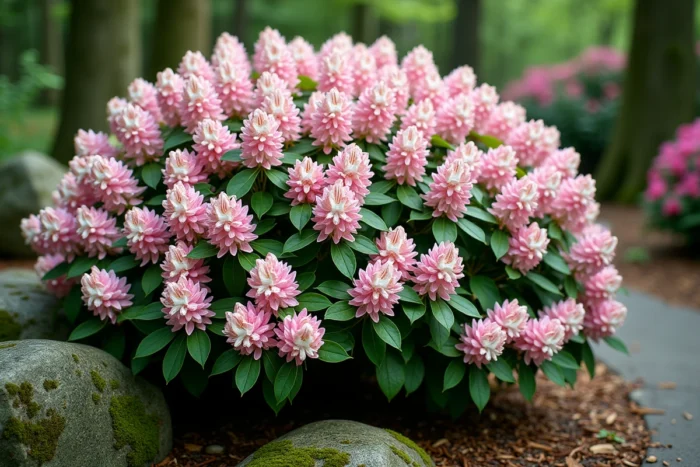
Kalmia latifolia, or mountain laurel, is a tree-like shrub that produces clusters of geometrically perfect pink flowers in late spring. Each bud resembles a plant origami.
Like Cornus kousa, it requires acidic and fresh soil. It tolerates partial shade, making it useful under the cover of larger trees. Its adult size remains contained, ideal for small gardens or woodland edges.
8. Kigelia africana
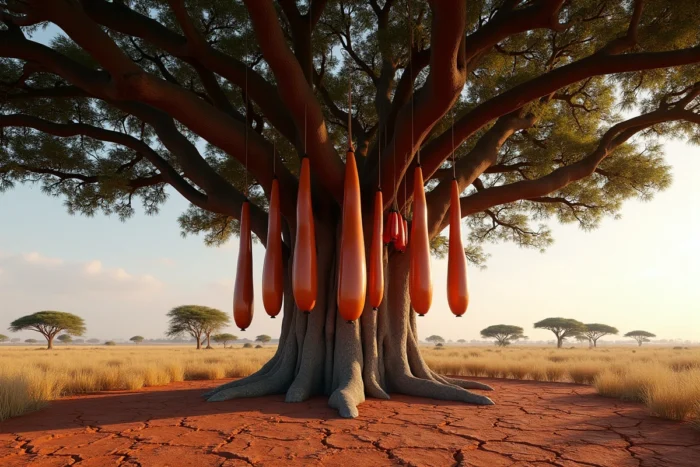
The sausage tree owes its nickname to its hanging fruits that can reach a surprising length. It is an African tropical species, unsuitable for European gardens in the ground except in the warmest areas of the Mediterranean coast.
Its interest in this ranking is mainly cultural and botanical. In a warm greenhouse or acclimatization garden, it constitutes a curiosity. For practical use in Belgium or northern France, it should be excluded.
9. Kerria japonica
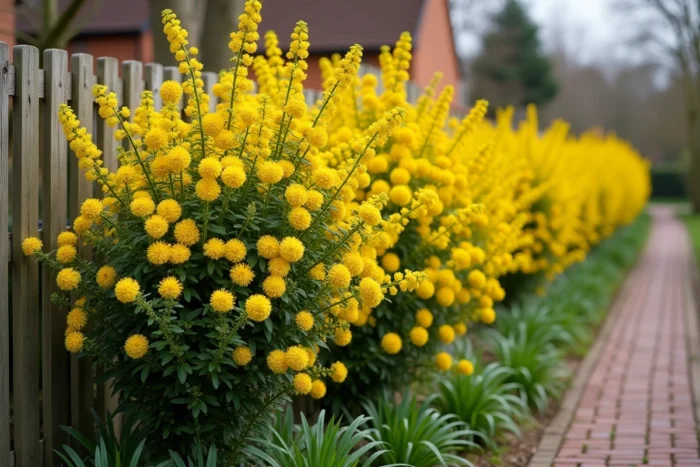
The Japanese Kerria is a shrub with spring yellow blooms, often trained against a wall. Its exceptional hardiness makes it reliable even in continental climates. It grows in almost any soil and tolerates partial shade.
The double-flowered variety (‘Pleniflora’) is the most common. Maintenance is limited to pruning after flowering to renew the branches. It is a pragmatic choice for quickly dressing a wall or fence.
10. Kolkwitzia amabilis
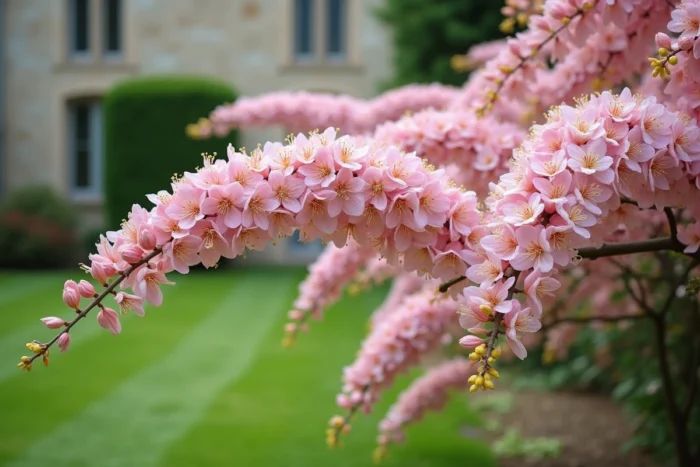
The beauty bush lives up to its name: at the end of spring, it is completely covered in pink flowers with yellow throats. Kolkwitzia tolerates almost all soils and exposures, making it one of the least demanding tree-like shrubs on this list.
It reaches a modest height and can serve as a free hedge or a solitary specimen. Its abundant flowering attracts pollinating insects. After flowering, light pruning is sufficient to maintain a harmonious shape.
The determining criterion for choosing among these ten species remains the soil pH. A simple soil test, available at garden centers, allows for the immediate elimination of incompatible species and focuses the investment on those that will truly thrive in your land.