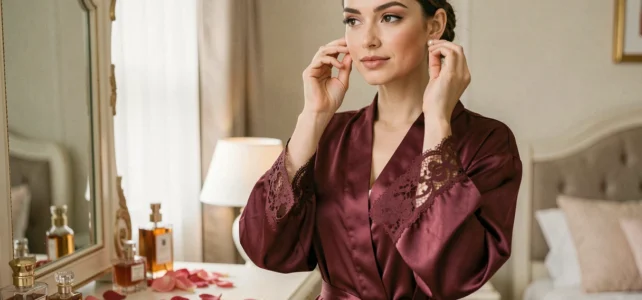
The lingerie market is undergoing a transformation that goes beyond the simple question of seasonal colors. Technical comfort, hybrid pieces worn as clothing, European regulatory constraints on unsold items: the lingerie trends of this season are redefining the contours of a sector long guided solely by the desire for seduction. The watchword is no longer to choose between pleasing and feeling good, but to merge the two.
The multifunctional bodysuit, a key piece of the intimate and visible wardrobe
French trend articles remain largely focused on the duo of matching bras and panties. However, the most striking phenomenon of the season is happening elsewhere: the bodysuit has established itself as a hybrid piece between lingerie and ready-to-wear.
Worn under a blazer, tucked into high-waisted jeans, or used as a standalone evening top, the multifunctional bodysuit takes on multiple roles. It sculpts the silhouette, replaces a classic underlayer, and functions as nightwear. This shift towards versatility explains its success, particularly in North America, where it occupies a central place in daily seduction rituals.
For this bet to work, the cut matters as much as the material. A bodysuit meant to be visible must offer a clean drape at the bust without marking the stomach, which requires architectural cuts rather than just stretchy fabric.
Models in fine lace with partial lining allow for transparency without compromising support. Those who relay the news from Lingerie & Séduction note that this category has been gaining ground in online searches for several seasons.

Comfort and breathability: what consumers really demand from their lingerie
Market studies on the innerwear sector converge on one point: a majority of consumers prioritize comfort and breathability as their top purchasing criteria. This finding far exceeds the usual seasonal approach, which highlights a seductive set for Valentine’s Day or a push-up model for summer.
Specifically, the demand is for materials that wick moisture, flat seams that do not mark under fitted clothing, and wide elastic bands that do not dig into the skin. Wireless bras and bralettes are no longer “casual” options: they are becoming the norm for a growing segment of the clientele.
Lace and comfort no longer exclude each other
The idea that lace would be incompatible with everyday comfort belongs to a bygone era. Current weaves, finer and more flexible, allow for the production of wireless lace bras that provide adequate support up to a certain cup size. Seduction no longer relies on physical constraint.
Brands that are making a mark offer ranges where the same model exists in both wired and wireless versions, allowing the customer to choose based on her body type and usage. This pragmatic approach is gradually replacing purely aesthetic discourse.
European regulation and the end of disposable lingerie
Since July 2026, large companies are no longer allowed to destroy unsold new clothing and shoes in the European Union. This ban directly affects the lingerie sector, where highly seasonal collections (seduction capsules, limited editions) generated significant stocks of unsold items.
For brands, the consequences are twofold. On one hand, collections must be designed with more adjusted volumes and less ephemeral pieces. On the other hand, the development of timeless models that can be worn across multiple seasons becomes an economic as well as ecological necessity.
- Eco-design is now part of the specifications: recycled or certified materials, packaging compliant with the PPWR regulation, enhanced traceability.
- The digital product passport (DPP) is starting to appear on certain textile ranges, allowing consumers to verify the origin and exact composition of a lingerie piece.
- Mid-sized brands, less equipped to absorb these constraints, risk seeing their production costs rise significantly.
Field reports vary on the speed of adaptation in the sector. Some brands have anticipated these obligations for several years, while others are discovering the requirements as implementation decrees unfold. The environmental labeling expected in October 2026 in France will add an additional layer of mandatory transparency.

Colors and chromatic boldness: beyond black and nude
Black and nude remain safe values, but this season’s palettes are expanding towards bolder shades. Deep burgundy, midnight blue, pine green: these colors allow for the integration of boldness without tipping into eccentricity.
The seduction challenge is shifting. Wearing an unexpected color under a sober outfit creates an intimate contrast that speaks more to self-confidence than provocation. Coordinated sets in saturated tones work particularly well with visible lingerie pieces, worn under an unbuttoned shirt or a mesh top.
Transparency and controlled layering
The trend of wearing lingerie as clothing requires mastering layering. A lace bra visible under an oversized blazer does not produce the same effect as a transparent bodysuit worn alone. The balance between what is shown and what is suggested remains the key to a credible seductive style.
The most versatile pieces of the season are those that work in both registers: elegant enough to be seen, comfortable enough to be forgotten for the rest of the day. It is this dual criterion, far more than the cut or the price, that now separates a useful purchase from a regrettable one at the back of the drawer.
The lingerie market is moving towards durable, comfortable, and visible pieces, driven by regulatory constraints as much as by consumer expectations. The seduction of this season relies less on the element of surprise and more on the correctness of the choice, that of a piece that one slips on each morning without thinking and that, by evening, does exactly what is expected of it.